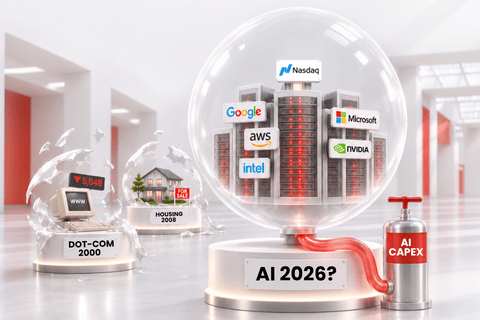


AI stock tumbles as Amazon, Alphabet and Intel face scrutiny over capex, free cash flow and returns. Is this another dot-com bubble or a valuation reset?
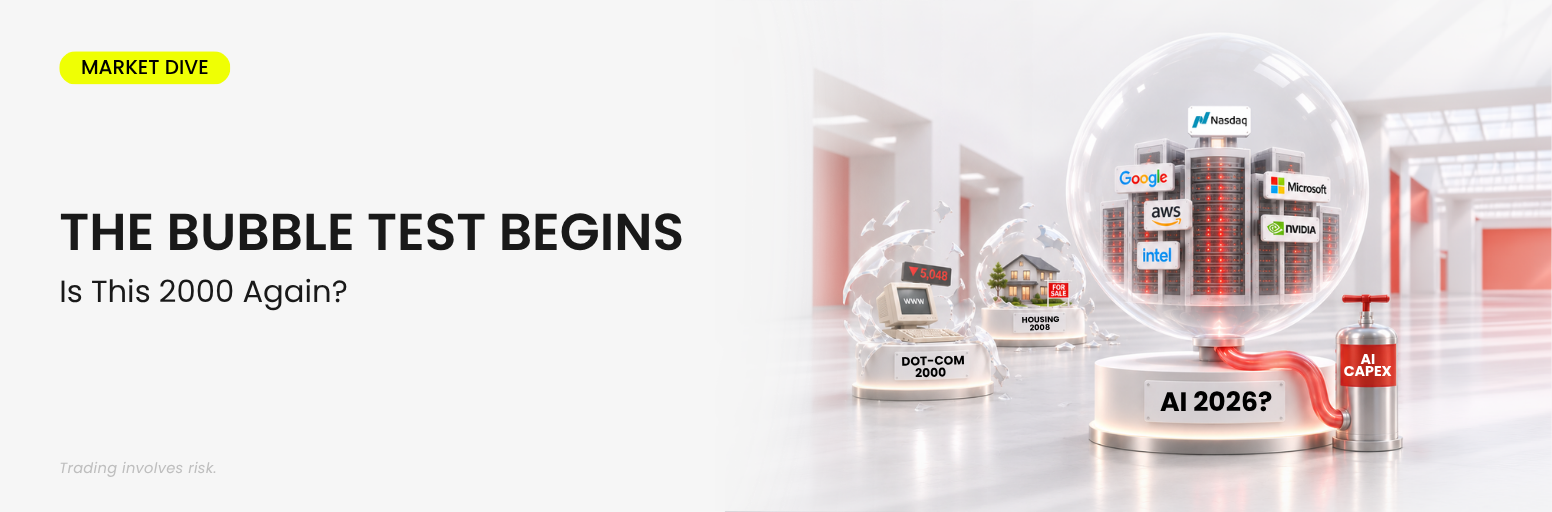
AI Stocks Are Selling Off. Is This 2000 All Over Again?
Alphabet lost almost 13% in a day. Intel crashed nearly 29%. Then the Nasdaq suffered its biggest one-day drop in 19 months.
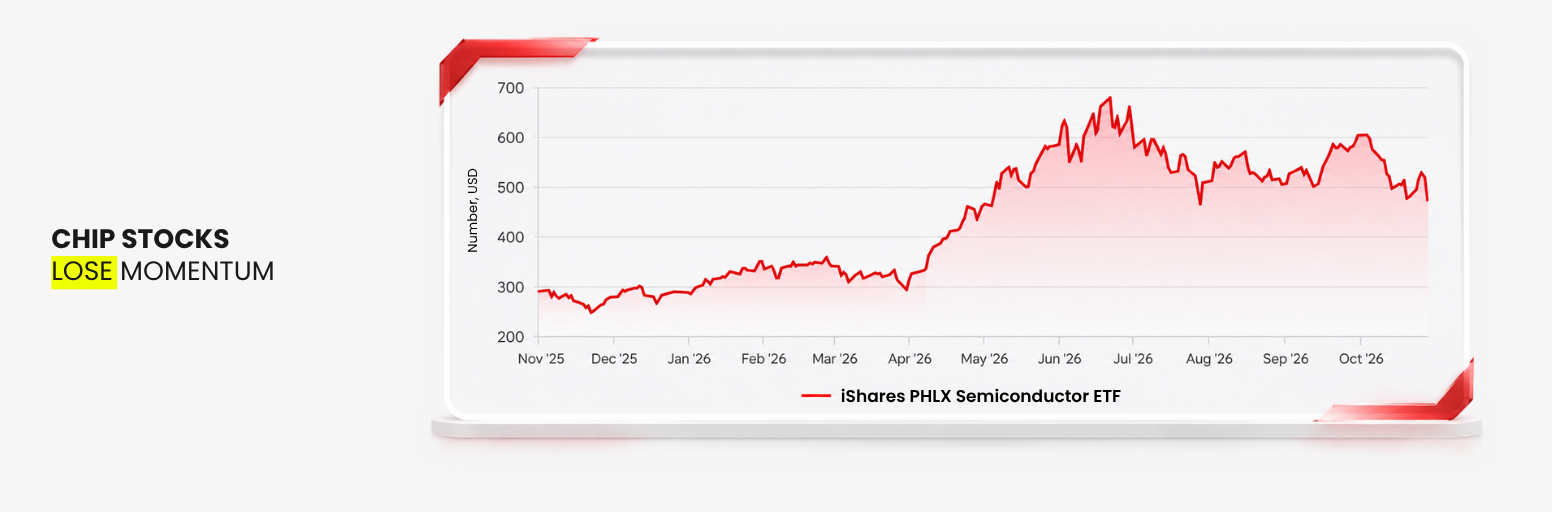
By the end of October, the AI trade suddenly looked uncomfortably familiar. On October 30, the Nasdaq Composite fell 2.9% and the S&P 500 dropped 1.8% as Intel plunged 28.6% on a disappointing outlook. Then, on November 5, the selling intensified: the Nasdaq fell 5.5% and closed in correction territory, more than 10% below its record, while the S&P 500 lost 4.4%. Investors are increasingly concerned that massive AI investment may not generate returns quickly enough.
It was the kind of technology selloff that invites one inevitable comparison: is this 2000 all over again?
There are similarities. Capital expenditure is surging, expectations are high, and investors have rewarded companies willing to spend aggressively on the next technological revolution. But there is one crucial difference. In 2000, many technology companies had extraordinary valuations without the earnings to support them. Today, Amazon, Alphabet and Intel are generating billions of dollars in revenue.
The problem is different: AI spending is rising faster than investors’ patience. The question is no longer whether AI demand exists. It is whether companies can turn hundreds of billions of dollars of investment into returns fast enough to justify the spending.
The AI Selloff Looks Like 2000. The Numbers Do Not.
Technology clearly took the biggest hit, but the scale and the source of the selling tell a more nuanced story.
Technology Took the Hit
For the week ending October 30, the Nasdaq fell about 2.0% while the S&P 500 lost only 0.6%, and the small-cap Russell 2000 actually gained 1.3%, according to weekly market data. On November 5, the selling spread more widely, with the Dow down 1,833 points.
Even then, AI was the epicenter: a leading semiconductor fund fell more than 12%, Nvidia lost 9.3%, AMD 17.3% and Intel another 10.3%, according to StockTitan market data. The trigger was AI-specific too: fears that the new Congress and state-level opposition could slow the data-center build-out, with UBS estimating that about 30% of planned 2028 data-center additions are now at risk.
A Valuation Reset, Not a Collapse
Even after November 5, the Nasdaq stood about 12% below its record and the S&P 500 about 6%. That is a correction, not a collapse: a valuation reset inside the AI trade. It extends a pattern we described a week ago in Gold Below USD 4,000: Is a Broad Bear Market Starting?, where expensive capital was forcing markets to identify the weakest links first. The earnings of Amazon, Alphabet and Intel show exactly where those links are.
Amazon: Record Margins, Negative Free Cash Flow
Amazon’s third-quarter numbers do not look like the results of a company facing collapsing demand.
AWS Demand Is Accelerating
Revenue rose 12% to USD 201.9 billion, and operating income reached USD 28.1 billion, an operating margin of 13.9% that Amazon called its highest ever. AWS was even stronger: revenue grew 39% to USD 46.0 billion, its fastest growth in nearly five years, with operating income of USD 17.8 billion.
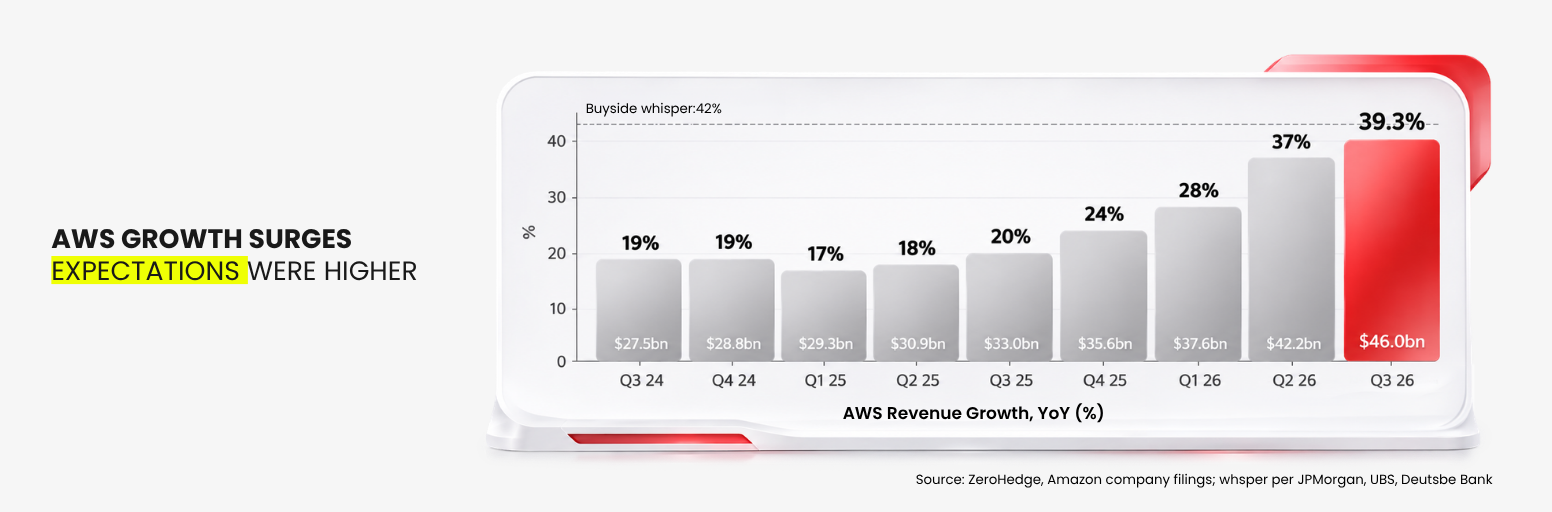
On its earnings call, Amazon said the AWS backlog had reached USD 578 billion and projected AWS growth above 40% in both 2027 and 2028. Those are not weak demand numbers. So why are investors worried?
AI Is Consuming the Cash
Amazon’s trailing 12-month operating cash flow rose 29% to USD 168.3 billion. Yet free cash flow moved the other way, to an outflow of USD 42.4 billion, compared with an inflow of USD 14.8 billion a year earlier.
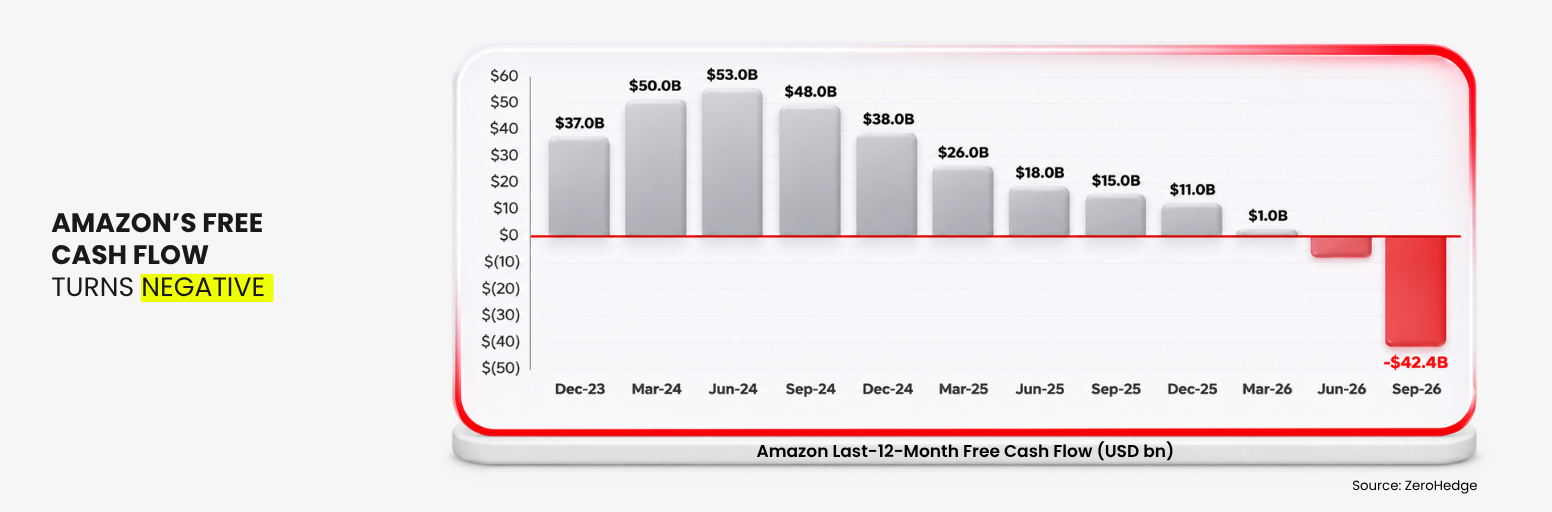
Amazon attributed this mainly to a USD 94.8 billion year-over-year increase in purchases of property and equipment, primarily for AI. It still expects roughly USD 220 billion of capital expenditure in 2026.
That creates one of the clearest contradictions in the AI boom: Amazon’s business is generating more cash than ever, and AI infrastructure is consuming it even faster.
The investment is not failing; customers are absorbing new AWS capacity almost as fast as it is installed. But the question has shifted from how quickly Amazon can build to how quickly that investment turns back into free cash flow.
Alphabet and Google: More AI Searches, Lower Monetization
Alphabet presents a more unusual problem. On the surface, its third-quarter results were exceptionally strong.
AI Is Growing Search Faster Than It Pays
Revenue rose 25% to USD 127.6 billion and operating income rose 30% to USD 40.6 billion, according to Alphabet’s earnings release. Search and other advertising revenue grew 12% to USD 63.3 billion, and Google Cloud revenue more than doubled to USD 30.7 billion. Chief executive Sundar Pichai said query growth was the highest in five years, helped by AI-powered Search.
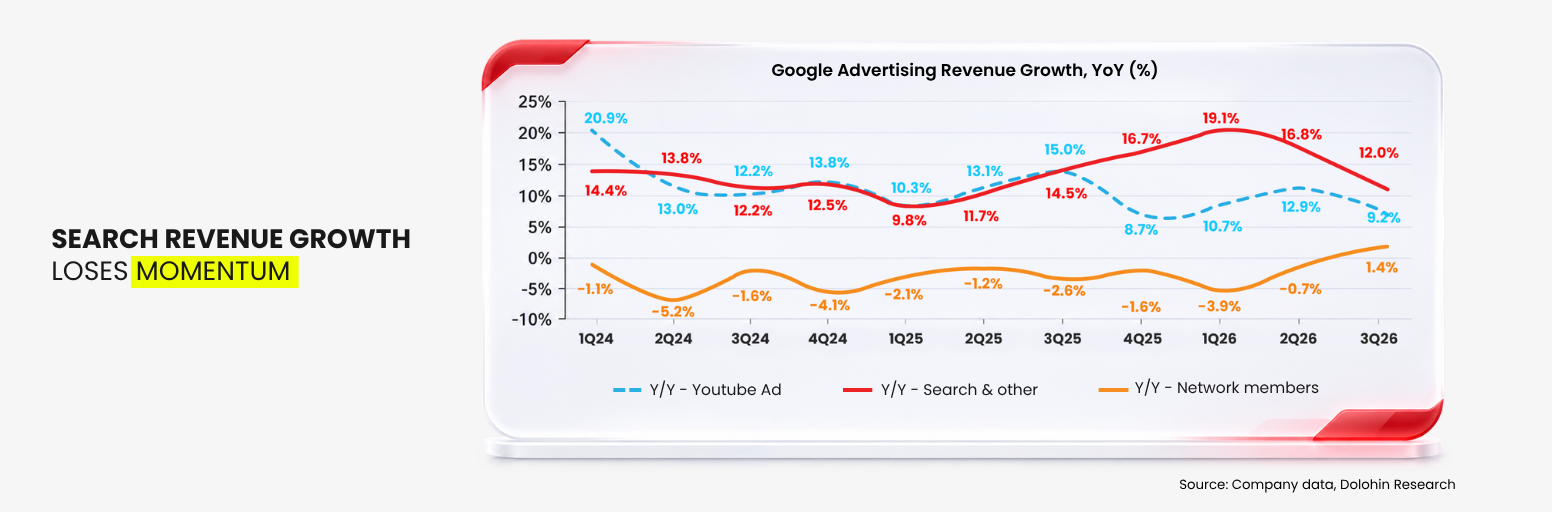
So Google Search is clearly not dead, but AI is changing its economics. On the earnings call, management said currency effects were the biggest drag on Search growth, alongside lower monetization in AI Mode.
AI is encouraging people to search more, with longer and more complex queries, but those searches do not yet earn as much as traditional Search. The company is scaling ads within AI Overviews and AI Mode to close that gap.
Google does not have a demand problem. It has a monetization-timing problem. And solving it is becoming increasingly expensive.
Spending Before Monetization Arrives
Alphabet spent USD 51.4 billion on capital expenditure in Q3, with about 65% going to servers and networking and around 35% to data centers. Free cash flow fell to minus USD 9.1 billion, weighed down by capex, a buildup of TPU inventory and a USD 5.2 billion European Commission fine payment. Alphabet kept its USD 195 billion to USD 205 billion 2026 capex range and expects spending to rise significantly again in 2027.
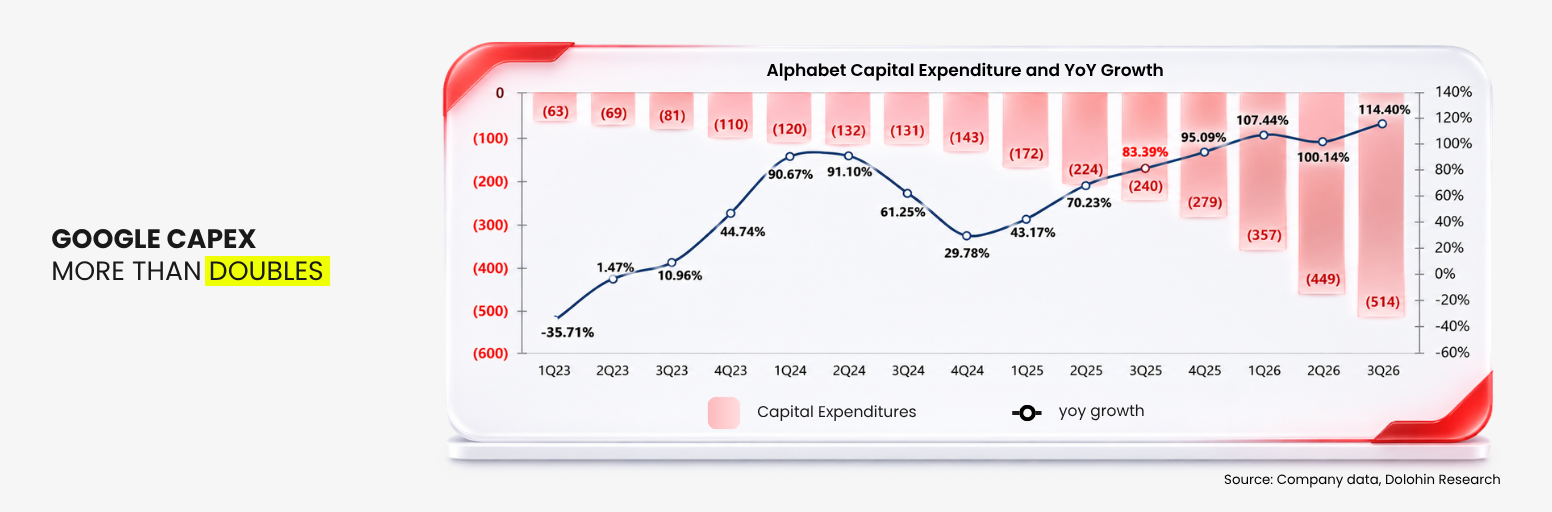
That leaves an uncomfortable timing gap. AI usage and cloud demand are accelerating today, while the full monetization payoff may arrive later. The realistic risk is not that AI destroys Search, but that AI changes the economics of Search faster than Google can replace the old monetization model. Alphabet shares fell 12.6% on October 29 as investors repriced that gap.
Intel Stock Plunges: Strong Quarter, Weak Outlook
Intel’s selloff came from a different problem entirely.
A Strong AI Quarter
Intel’s third-quarter results were surprisingly strong. Revenue rose 21% to USD 16.5 billion, adjusted earnings per share reached USD 0.52 and adjusted gross margin improved to 44.1%. Most importantly for the AI story, Data Center and AI revenue jumped 78% to USD 7.3 billion, while Intel Foundry revenue rose 58% to USD 6.7 billion.
Intel’s Weak Fourth-Quarter Guidance
Then came the outlook. Intel guided fourth-quarter revenue to just USD 15 billion to USD 16 billion, with adjusted EPS falling to USD 0.25 and adjusted gross margin to 38%. Management said the PC slowdown would continue at least through the first half of 2027, and an incident at its Israel facility is expected to cost around USD 300 million of fourth-quarter revenue.
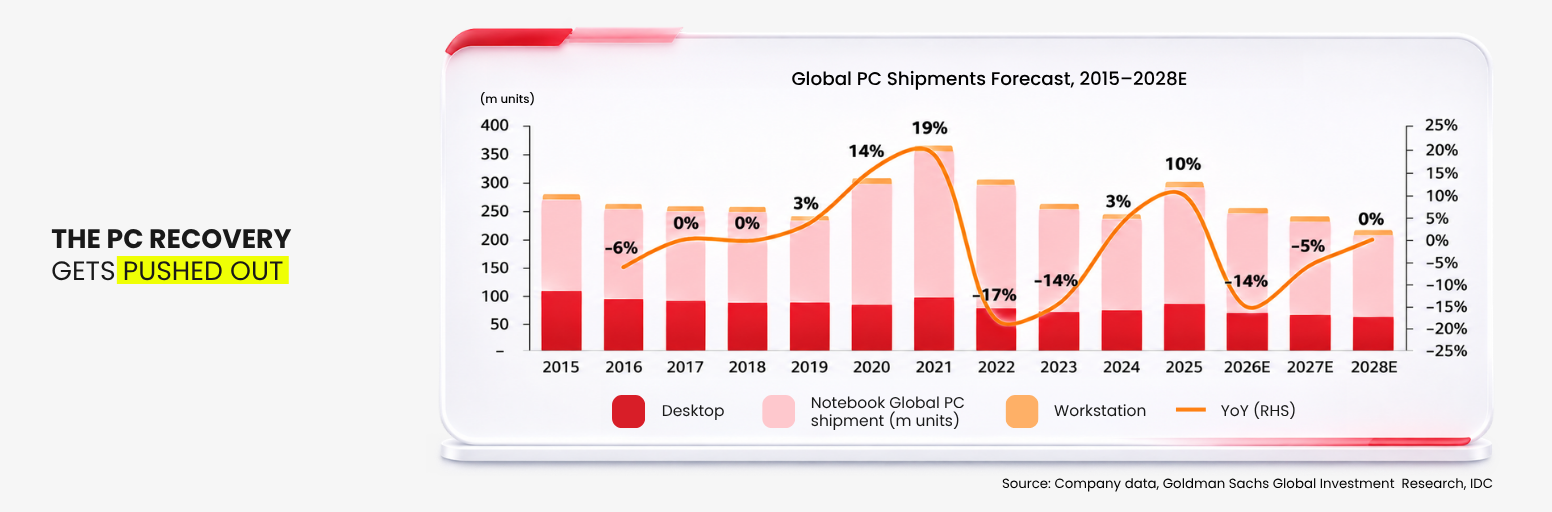
Investors had expected an improving PC market to combine with accelerating data-center demand. Instead, the PC recovery moved further away while margins weakened sharply. Intel fell 28.6% on October 30, its worst day since 1974. Intel did not collapse because AI demand disappeared. Its data-center business is growing rapidly; weakness elsewhere simply overwhelmed the positive AI story.
Why the AI Boom Is Not the Dot-Com Bubble, at Least Not Yet
Step back from the daily stock moves and the picture becomes clearer.
Three Selloffs, Three Different Problems
Amazon has extraordinary AWS demand, but AI investment is overwhelming free cash flow. Alphabet has extraordinary AI usage and cloud growth, but monetization is not yet keeping pace with its spending. Intel has strong data-center demand, but its PC outlook and margins deteriorated sharply.
Microsoft shows the other side. Its Azure growth accelerated to 48% while capex came in below forecasts, and its shares held up far better. None of these results says AI demand is disappearing. They say the market is now separating AI winners from AI spenders, much as we argued in OpenAI Revenue Scare: Is the AI Chip Boom Really Slowing?
Dot-Com Crash vs Today: The Scale Is Not Comparable
The selloff may feel dramatic, but even after the November 5 plunge, the Nasdaq’s roughly 12% decline is nowhere near the scale of the dot-com collapse. From its March 2000 peak to its October 2002 trough, the Nasdaq Composite lost nearly 80% of its value.
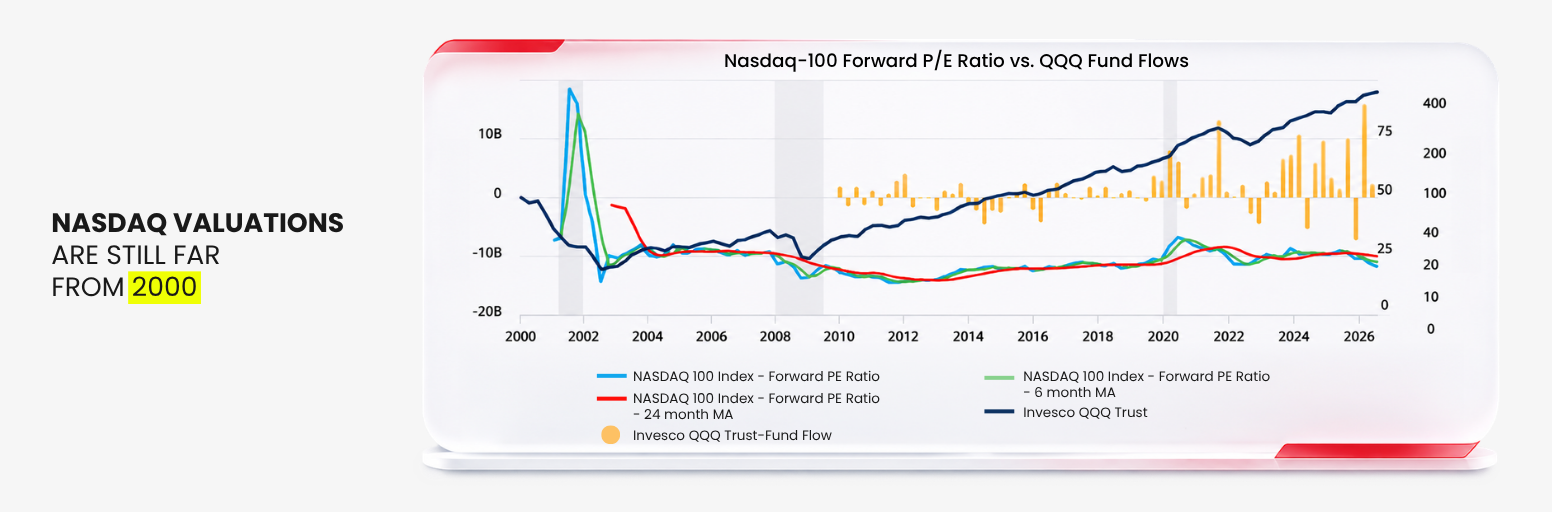
In the 2000 to 2002 bear market, the S&P 500 fell roughly 49%, and during the Global Financial Crisis it fell around 57% from its October 2007 peak to its March 2009 trough. The current market is nowhere close to those conditions.
Real Businesses, a Different Risk
The companies at the centre of today’s technology trade are also fundamentally different. Amazon generated USD 28.1 billion of operating income in one quarter and Alphabet USD 40.6 billion, while Intel’s Data Center and AI business is growing 78%. These are real businesses with real revenue, profit and cash flow.
That does not mean valuations cannot fall, or that every AI company will survive. As our Dxpert column notes in AI Investing Explained: Opportunities, Risks and What Drives AI Stocks, AI succeeding as a technology does not guarantee that every AI investment will. But the central risk has changed. In 2000, investors discovered that many companies could not generate enough earnings to justify their valuations. Today, they are asking whether massive existing earnings can grow fast enough to justify an unprecedented investment cycle.
What Should AI Stock Traders Watch Next?
The next stage of the AI trade is likely to depend less on how much companies spend and more on what that spending produces.
Free Cash Flow and Return on Capital
Amazon and Alphabet show why free cash flow matters. Revenue can keep growing even as infrastructure spending pushes free cash flow sharply lower, and if that continues, investors may become less willing to reward AI spending on its own. Ultimately, return on invested capital may be the metric that matters most.
AI Monetization in Search
Google’s Search transition is a key test. If AI-powered Search eventually monetizes at rates comparable to traditional Search, the economics become much stronger. If monetization remains structurally weaker, the investment case becomes harder.
Infrastructure Demand: Nvidia on November 17
Cloud backlogs, data-center utilization and semiconductor orders will show whether underlying AI demand is still expanding. Nvidia’s results, scheduled for November 17, will be the next major read. A sustained deterioration in demand would matter far more than a one-day selloff in technology shares.
The Macro Calendar
Democrats won control of both the House and the Senate in the November 3 midterms, according to projections by NBC News. Stocks rallied the next day, then gave it all back on November 5 as investors weighed what the new Congress, which takes office in January, could mean for AI regulation and data-center construction. The October jobs report on November 6 and October CPI on November 10 will also shape expectations for the Fed’s December meeting, and with them the cost of capital that AI spending has to beat, the higher-for-longer pressure we flagged in our Q4 2026 Market Outlook.
AI Demand Is Real. Now It Has to Turn Into Cash.
The selloff of late October and early November looked frighteningly familiar. Technology valuations fell, semiconductor stocks cracked, and investors began questioning whether the industry had spent too much, too quickly.
The Real Bubble Test Is Return on Capital
But one crucial difference separates today’s AI boom from the dot-com bubble: the AI economy already has customers, revenue and profits. Amazon has a USD 578 billion AWS backlog, Google Cloud revenue has more than doubled, and Intel’s data-center business is growing 78%.
For much of the boom, more capex was treated as bullish because it signaled demand and confidence. That is changing. Building AI infrastructure means paying for chips, networking, data centers, power and cooling upfront, while the returns may take years. Investors now want evidence that spending is turning into revenue, margins and free cash flow.
Who Turns Spending Into Cash
The demand is real. What remains unproven is whether the returns will justify the extraordinary cost of building the infrastructure. That does not mean the AI investment cycle is ending; it means the easiest phase may be over.
The next phase of the AI trade will not be decided by who spends the most. It will be decided by who turns that spending into cash.
By D Prime Analysis Team
Macro and market strategy research by D Prime’s in-house analysis team.
Disclaimer
The information contained herein is provided for general informational and educational purposes only and does not constitute investment advice, financial advice, trading advice or any other form of professional advice, a recommendation, or an offer or solicitation to buy or sell any financial instruments or engage in any trading strategy.
Trading in leveraged products such as contracts for difference (CFDs) involves a significant risk of loss and may not be suitable for all investors. Past performance is not indicative of future results. Any references to market trends, asset performance, price levels, or forward-looking statements reflect opinions or general market commentary as at the date of publication and are subject to change without notice. Such statements are not guarantees of future performance or outcomes, may not materialise, and actual results may differ materially from those anticipated.
This article does not take into account any individual investor’s objectives, financial situation, or risk tolerance. Readers should conduct their own independent research and seek professional advice before making any investment or trading decisions. D Prime and its affiliates make no representations or warranties about the accuracy or completeness or reliability of this information and disclaim any and all liability for any direct, indirect, incidental, consequential, or other losses or damages arising out of or in connection with the use of or reliance on any information contained herein. The above information should not be used or considered as the basis for any trading decisions or as an invitation to engage in any transaction. Do not rely on this article to replace your independent judgment.
“D Prime” is a brand name of D Prime Vanuatu Limited, a company incorporated and regulated by the Vanuatu Financial Services Commission (Company Number: 700238). The availability of products and services may vary depending on jurisdiction and applicable regulatory requirements.